How Much Does a Corporate Recycling Service Cost in Sabah?
August 21, 2026
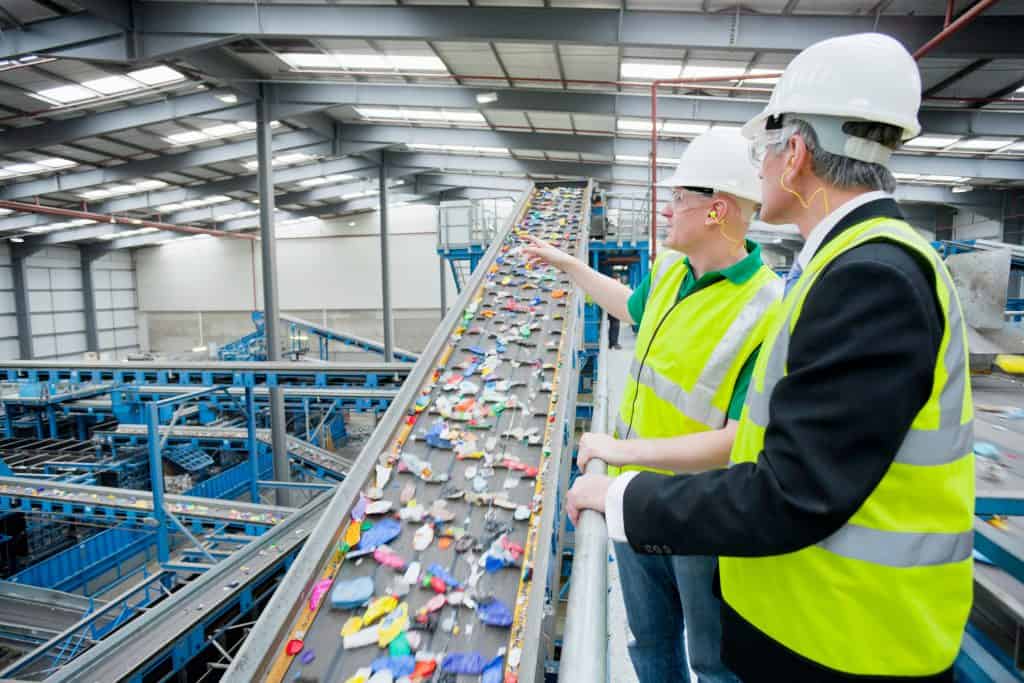
It's the first question every operations manager asks, and the hardest one to get a straight answer to. Most providers reply with "it depends" and a request for a site visit.
Fair enough — it genuinely does depend. But "it depends" isn't useful when you're trying to build next year's budget. So here's the actual breakdown: how the cost of a corporate recycling service is calculated in Sabah, which factors move the number, and how to compare quotes properly.
First: You're Already Paying for Waste
This is the part that gets skipped. A corporate recycling service is rarely a new line item — it's usually a reallocation of an existing one.
Right now you're likely paying for:
- Skip or bin rental — a fixed monthly charge
- Collection frequency — priced per pickup, whether the skip is full or not
- Landfill tipping fees — charged by volume or weight
- Staff time — internal handling, hauling, and consolidation
When recyclables come out of the general waste stream, general waste volume drops — often by 30–50% for hospitality and office environments. Fewer skip pickups. Lower tipping charges. That saving offsets some, and occasionally all, of the recycling service cost.
The right comparison isn't "recycling cost vs zero." It's "total waste cost before vs total waste cost after."
The Four Pricing Models
Corporate recycling in Malaysia is generally priced one of four ways.
1. Per-Collection (Flat Fee)
You pay a fixed amount each time the truck comes, regardless of weight.
- Best for: predictable, steady volume
- Watch out for: paying full price for a half-empty pickup during low season
2. Per-Tonne / Per-Kilogram
You pay by the weight collected.
- Best for: businesses with fluctuating volume — resorts with sharp peak seasons, event venues, seasonal factories
- Watch out for: minimum-weight clauses that charge you for a full tonne when you produced 400 kg
3. Subscription / Retainer
A fixed monthly fee covering a set number of collections plus bins, signage, staff training, and reporting.
- Best for: organisations that need documented ESG reporting and want one predictable number for the budget
- Watch out for: what's not included — extra pickups, contamination charges, bin replacement
4. Rebate or Revenue-Share
For clean, high-value, well-sorted material — particularly PET and rigid HDPE in volume — the material itself has resale value. In these arrangements the provider offsets the collection cost against material value, and at sufficient volume and quality the service can approach cost-neutral.
- Best for: large-volume generators with disciplined sorting — hotels, bottling operations, large offices, manufacturers
- Watch out for: rebates tied to commodity prices, which move
What Actually Drives Your Price Up or Down
🔻 Factors that lower your cost
- Good sorting. Pre-sorted, clean material needs far less handling at our end. This is the single biggest lever you control.
- Volume. Higher volume improves cost per kilogram significantly.
- High-value streams. PET and HDPE carry real material value. PP is moderate. Film and mixed grades carry little to none.
- Accessible loading point. Ground-level access where a truck can reverse in is cheaper to service than a basement bay with height restrictions.
- Consolidated sites. Multiple properties on one route cost less per site than scattered single pickups.
- Predictable schedule. Fixed routes are cheaper than on-call callouts.
🔺 Factors that raise your cost
- Contamination. Food residue, liquid, or mixed non-recyclables mean sorting labour — and heavily contaminated loads may need to be rejected and disposed of, which you pay for twice.
- Distance. Properties in Kudat, Semporna, or Tawau carry higher transport cost than Kota Kinabalu, Sepanggar, or Penampang.
- Low volume, high frequency. Daily pickup of small quantities is the most expensive pattern there is.
- Difficult access. Manual carry, stairs, tight lanes, restricted service hours.
- Low-value material only. A film-only or polystyrene-heavy stream has cost but little offsetting value.
- Extra services. Detailed audits, bespoke reporting formats, on-site staff training, bin supply.
Getting a Quote You Can Actually Compare
When you're weighing providers, make sure every quote answers the same eight questions:
- What's the pricing model — per pickup, per tonne, subscription, or rebate?
- Is there a minimum charge or minimum weight?
- What's included — bins, signage, training, reporting?
- What's the contamination policy, and what does a rejected load cost?
- What's the peak-season flexibility for additional pickups?
- Do you get documented weight records per collection?
- Where does the material go after it leaves your site?
- What's the contract term and exit clause?
Question 6 and 7 are the ones that separate a real service from a lorry. If a provider can't give you documented weights, you have nothing to put in a sustainability report — and you're paying for a feeling, not a service.
The Value That Doesn't Show on the Invoice
Cost is only half the equation. The return side includes:
- Reduced general waste charges — the direct, immediate offset
- ESG and certification compliance — green hotel certifications, corporate procurement requirements, and sustainability-linked tenders increasingly require documented diversion figures
- Tender eligibility — a growing number of corporate and government contracts require evidence of a waste management programme
- Brand and guest perception — particularly for tourism and hospitality in Sabah, where environmental credibility affects bookings
- Closed-loop product value — your own recovered material returned as branded merchandise, corporate gifts, or landscaping units, which replaces a separate procurement line entirely
Our Approach
We quote after we understand your waste, not before. That means:
A free waste audit first. We look at what you actually generate, in what volumes, in what condition, and where the loading access is. No charge, no obligation.
Then a written quote with the pricing model stated plainly, everything that's included listed, and no charges that appear later.
Documented weights on every collection, formatted for ESG and green certification reporting.
For most Kota Kinabalu–area businesses with reasonable volume and decent sorting discipline, the recycling service cost is partly or largely offset by the drop in general waste charges. Whether that's true for your site is exactly what the audit tells us.
Find Out What Yours Would Cost
Send us your rough monthly waste volume and location, and we'll tell you honestly whether a service makes financial sense for you — including if the answer is not yet.
LJD Corporation / Pertubuhan Hijau Lestari Sabah (PERHILAS) Pusat Kitar Semula PERHILAS Kampung Kepayan Baru, 88450 Kota Kinabalu, Sabah 📧 info@ljdofficial.com 📞 011-6187 0395
The Types of Plastic We Accept for Reprocessing
A plain-English guide to the types of plastic that are recyclable, what we can actually reprocess at our centre, and how to prepare it before drop-off or collection.
July 30, 2026

From Waste to Branded Product: LJD's 3-Step Process
How discarded plastic and glass become corporate gifts, retail products, and merchandise your customers actually want to keep.
July 29, 2026